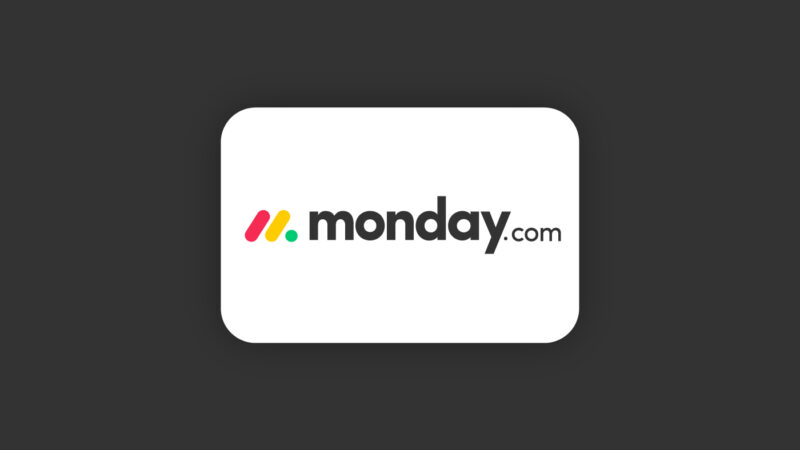
The Monday.com logo is bold, colorful, and instantly recognizable—perfectly reflecting the platform’s mission to make work more visual, flexible, and transparent. With its vibrant symbol and friendly typography, the logo communicates movement, collaboration, and momentum, setting Monday.com apart in the crowded productivity software space.
The Origin of the Monday.com Logo
Monday.com was founded in 2012 by Roy Mann and Eran Kampf. Originally launched under the name dapulse, the platform rebranded to Monday.com in 2017 to support global growth and clearer positioning.
That rebrand wasn’t just about a new name—it was about creating a visual identity that felt modern, energetic, and adaptable. The new logo needed to work across dashboards, apps, marketing campaigns, and integrations, while also reflecting the flexibility of the product itself.
What Type of Logo Is It?
The Monday.com logo is a combination mark, consisting of:
-
A abstract symbol made up of colorful vertical shapes
-
A clean sans-serif wordmark
This structure allows the symbol to stand alone in digital environments (like app icons), while the full logo provides clarity in branding and communication.
Design Elements and Symbolism
The Monday.com logo is intentionally expressive and modular:
-
The Symbol: The icon is formed by several rounded vertical shapes in different colors. These represent tasks, timelines, or workflows—stacked, moving, and evolving.
-
Color Palette: Bright colors such as red, yellow, blue, and green convey energy, creativity, and diversity. This palette reinforces the idea that work doesn’t have to feel dull or rigid.
-
Rounded Geometry: Soft edges make the logo feel friendly and accessible, avoiding the cold, corporate feel common in enterprise software.
-
Typography: The lowercase sans-serif wordmark adds approachability and readability, aligning with modern SaaS design standards.
Altogether, the logo feels dynamic—like a system in motion rather than a static brand mark.
Brand Recognition & Global Impact
Monday.com has built strong recognition in the productivity and SaaS space through consistent visual branding and heavy product usage. Its colorful symbol stands out immediately among more neutral competitors.
In recognition testing, out of 50 test users surveyed, around 41 were able to associate the colorful vertical icon with Monday.com, particularly when shown in a software or dashboard context. This shows how repeated in-product exposure can drive recognition even without relying on text.
The logo’s bold use of color plays a major role here—it’s hard to confuse Monday.com with any other productivity platform.
Does the Monday.com Logo Work in Small Sizes?
Yes. The symbol scales well thanks to its solid shapes and strong color contrast. Even at small sizes—such as app icons or browser tabs—the logo remains legible and distinct.
The modular nature of the icon also allows it to adapt easily to motion graphics and UI elements, which is especially valuable for a digital-first brand.
How Monday.com Compares to Competitors
Asana: Uses a calm, minimal pictorial logo focused on balance. Monday.com feels more energetic and expressive.
Trello: Relies on a symbol tied to boards and cards. Monday.com’s logo is more abstract and flexible.
Slack: Uses a colorful symbol focused on communication. Monday.com’s identity emphasizes structure and workflow instead.
Among productivity tools, Monday.com stands out for embracing color and motion as core parts of its brand.
Should They Change the Logo?
No. The Monday.com logo is well aligned with the platform’s identity and user experience. Its boldness and flexibility make it suitable for long-term use, especially as the product continues to expand into new industries and use cases.
Any future changes would likely involve refinement or animation rather than a complete redesign. The current visual system already communicates energy, clarity, and adaptability effectively.
Conclusion
The Monday.com logo proves that productivity branding doesn’t need to be neutral or boring. Through color, motion, and friendly typography, it reflects a modern approach to work—flexible, visual, and human.
It’s a logo designed to live inside the product, not just on marketing pages. At Rabbit Logo, we design logos with the same philosophy—visual systems that support how brands actually function, grow, and connect with their users every day.